

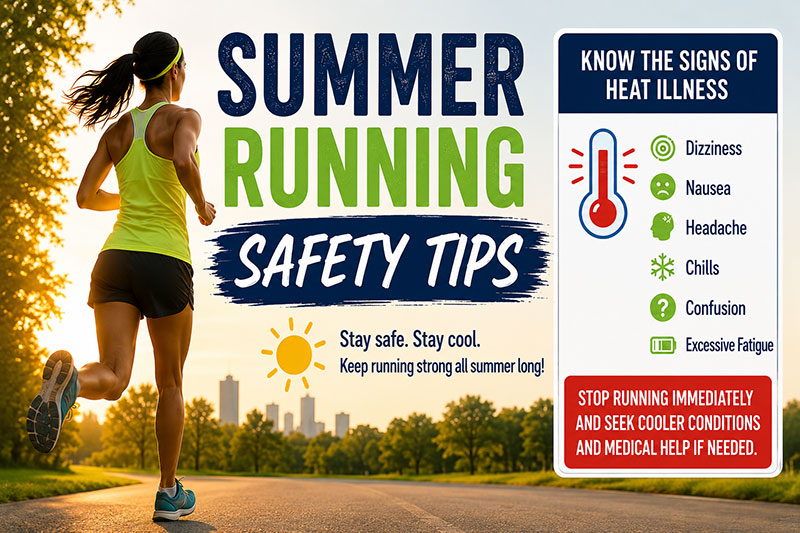
Summer running can be enjoyable and productive, but heat and humidity add real stress to the body. These tips help runners stay safer, perform better, and avoid heat-related problems.
1. Run Early or Late in the Day
The safest times to run are usually:
Early morning
Near sunset
After dark in well-lit areas
Avoid running during peak afternoon heat when temperatures and UV exposure are highest.
2. Slow Your Pace in Hot Weather
Heat makes your heart work harder. Even experienced runners often need to slow down in summer.
A good rule:
Run by effort, not pace
Expect slower times during hot and humid conditions
Humidity can make temperatures feel much hotter because sweat evaporates less effectively.
3. Hydrate Before, During, and After
Hydration matters long before your run starts.
Before Running
Drink water consistently throughout the day
Avoid starting dehydrated
During Running
For longer runs:
Carry water
Use hydration belts or handheld bottles
Plan routes with water stops
After Running
Replace:
Fluids
Electrolytes
Sodium lost through sweat
4. Wear Light, Breathable Clothing
Choose:
Moisture-wicking fabrics
Light colors
Lightweight socks
Ventilated hats or visors
Avoid heavy cotton shirts because they trap sweat and heat.
5. Use Sunscreen
Even cloudy days can cause sunburn.
Use:
SPF 30 or higher
Sweat-resistant sunscreen
Lip balm with SPF
Reapply during long outdoor sessions.
6. Know the Warning Signs of Heat Illness
Stop running immediately if you experience:
Dizziness
Chills
Nausea
Confusion
Headache
Excessive fatigue
Heat exhaustion and heat stroke are serious medical emergencies.
7. Adjust for Humidity
Humidity often affects runners more than temperature alone.
On humid days:
Shorten your run
Add walk breaks
Lower intensity
Focus on effort instead of speed
8. Choose Shaded Routes
Parks, tree-lined trails, and greenways can feel dramatically cooler than open pavement.
Bonus benefits:
Less direct sun exposure
Reduced pavement heat
More comfortable long runs
9. Wear Reflective Gear if Running Early or Late
Lower-light conditions improve temperature comfort but reduce visibility.
Use:
Reflective vests
LED lights
Bright clothing
Headlamps if needed
10. Acclimate Gradually
Your body adapts to heat over time.
For the first 1–2 weeks of summer:
Reduce intensity
Shorten long runs
Increase recovery time
Most runners improve heat tolerance gradually with consistent exposure.
11. Don’t Ignore Air Quality
Hot summer days can also bring:
Ozone alerts
Smoke
Poor air quality
Consider indoor workouts or shorter runs when air quality is poor.
12. Recover Properly After Hot Runs
Summer recovery is extra important.
After running:
Cool down slowly
Rehydrate
Eat balanced meals
Replace electrolytes
Rest in cooler environments
Bonus Tip: Have a Backup Plan
Extreme heat days are not failures.
Alternatives include:
Treadmill workouts
Cross-training
Shorter recovery runs
Indoor strength training
Consistency matters more than forcing dangerous runs.
Quick Summer Running Checklist
Before heading out:
Hydrated?
Sunscreen applied?
Checked temperature and humidity?
Wearing breathable gear?
Water available?
Route planned?
A few minutes of preparation can make summer running safer and much more enjoyable.